



What Is Shamir Secret Sharing for Seed Phrases?
What Is Shamir Secret Sharing for Seed Phrases?
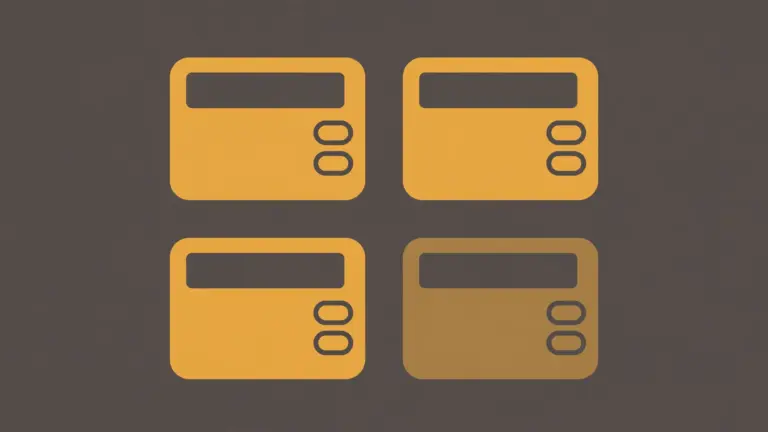
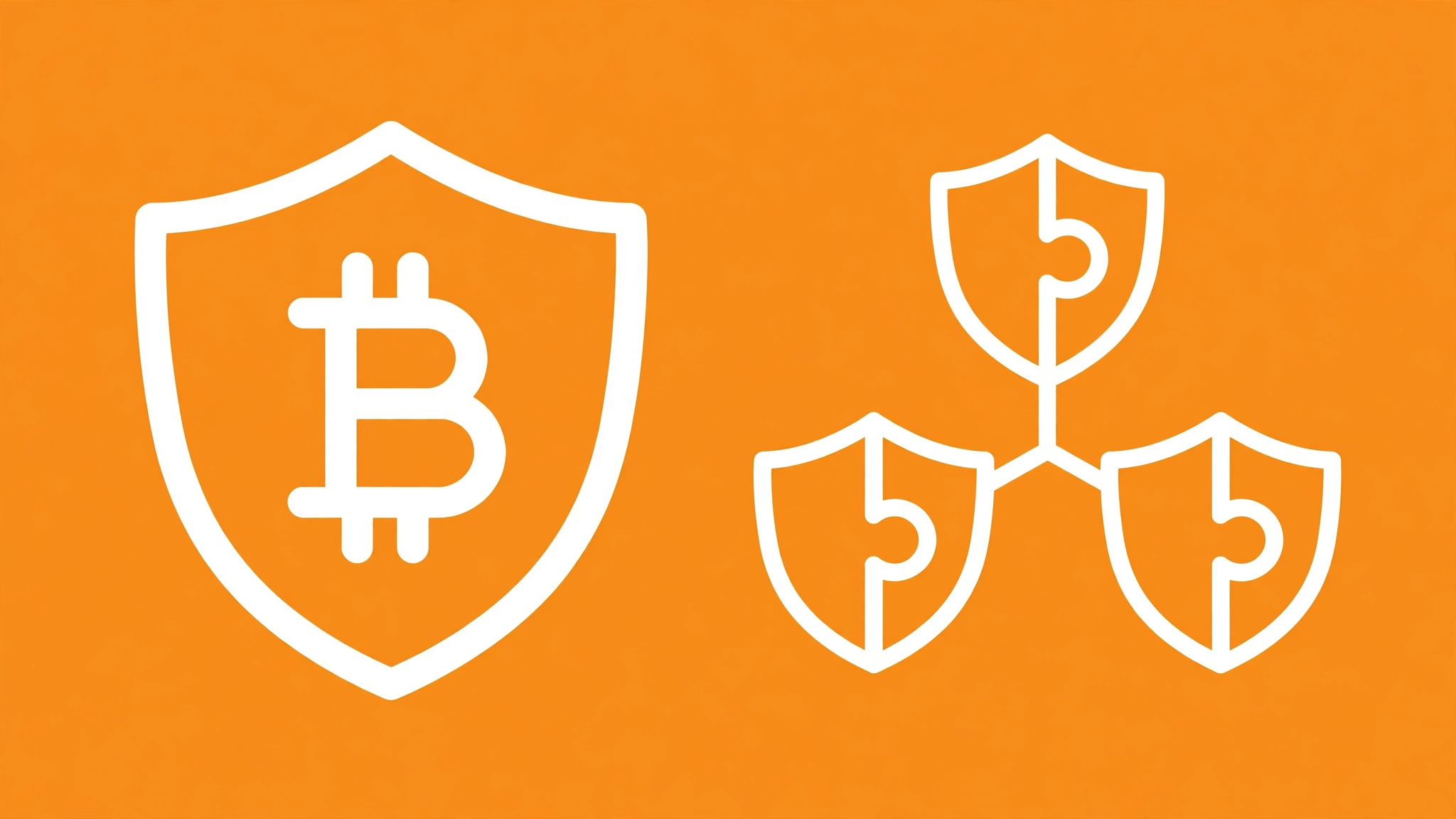
Shamir secret sharing for seed phrases is a method that splits your wallet’s master secret into several share groups, for example 5 shares, so that any 3 of them can rebuild the wallet while 2 or fewer reveal nothing at all. It is defined for hardware wallets by the SLIP-0039 standard, often called Shamir Backup, and supported by Trezor devices. Think of it as the mathematically rigorous version of splitting your backup: you choose both how many shares exist and how many are required to recover.
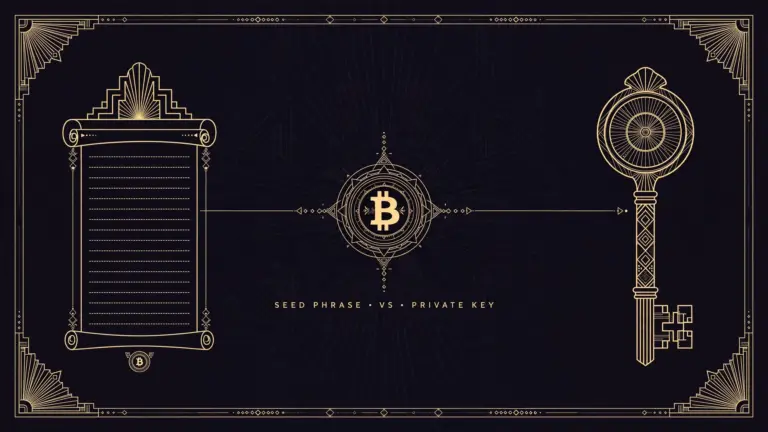
The difference from just splitting words yourself is what makes it special. When you split a 12-word seed phrase by hand and lose half the words, the remaining half is still a real clue about your wallet, because the words sit in known positions. With Shamir secret sharing, any number of shares below your threshold gives an attacker zero usable information. Two shares out of a required three are exactly as useful as zero.
How Shamir secret sharing for seed phrases works
Shamir secret sharing is a cryptographic technique published by Adi Shamir in 1979. The idea: encode your secret as a point on a curve, then hand out other points on that same curve as shares. With a 2-of-3 setup, any two points define the curve and reveal the secret, while a single point alone could belong to infinitely many curves and tells you nothing.
For bitcoin wallets, SLIP-0039 (SatoshiLabs Improvement Proposal 39) packages this into share groups of recovery words. Each share looks like a word list, 20 or 33 words depending on the setup, drawn from the same 1024-word SLIP-0039 wordlist. You generate them on the hardware wallet itself during setup, write each share on durable media, and store the shares in different locations.
The threshold is your choice. A common setup is 3 shares where any 2 recover the wallet, stored at home, at a relative’s house, and in a bank safe deposit box. Lose the copy at home in a fire and the other two still recover everything. A burglar who finds one share has gained nothing.
What the shares actually look like
A SLIP-0039 share is a list of words, but it is not a BIP39 seed phrase and you must not import it into a regular wallet. Each share starts with metadata words encoding the threshold and the share index, which is how the hardware wallet knows which shares combine. The shares are meaningless without the rest of the threshold, and that is the point.
This trips up a lot of people. Do not type individual shares into software wallets to “test” them. The shares only do something when combined on a compatible hardware wallet. Recovery happens by entering the required number of shares into the device, which reconstructs the master secret internally and derives your keys.
Store each share as its own complete, independent backup: stamped steel plates or paper in tamper-evident envelopes, one per location. Label each share with its index (Share 1 of 3) and the threshold (2 required), never with the word “seed phrase” or anything that hints at the contents. A bored relative opening a sealed envelope should find words that mean nothing to them.
Why it beats splitting words by hand
The most popular DIY alternative is splitting a 12-word phrase into overlapping halves or thirds, covered in should you split a seed phrase across three locations. That works, but it has a weakness: every piece is a real fragment of the phrase. Someone who finds 8 of your 12 words is a long way toward your bitcoin, because the missing words can be brute forced with the checksum and known positions narrowing the search.
Shamir shares do not have this property. Below the threshold, a share is cryptographically useless, not just incomplete. There is no partial progress toward recovery, no narrowing of the search space. This turns “find one backup” from a near-miss into a non-event.
The other advantage is flexibility. With manual splitting you are stuck with fixed fragments: lose two of three and you are done. With a 3-of-5 scheme you can lose any two shares and still recover. The threshold is tuned to your paranoia level instead of being forced by the arithmetic of word counts.
For the broader strategy of where backups live, the walkthroughs at Never Lose Bitcoin guides cover storage, testing, and inheritance in one place.
When Shamir backup makes sense, and when it does not
Shamir backup shines when your single biggest risk is a single point of failure. If you hold enough bitcoin that a stolen backup would be catastrophic, if you live alone and worry about a fire taking your only copy, or if you want family members to recover funds without any one of them being able to do it alone, it is the right tool.
It is overkill when you hold small amounts or when the complexity itself becomes the risk. Shamir backup has moving parts: more shares to store, more locations to manage, and heirs who need to understand the threshold. A confused heir who finds one share and does not know two more exist cannot recover anything. For amounts where a simple two-copy backup suffices, simplicity wins. Two copies in two locations, on durable media, verified once, beats a clever scheme you never finished setting up.
It also does not replace a passphrase. A passphrase, the optional extra word on top of your backup, protects against a stolen complete backup, as explained in what is a passphrase (25th word) and should you use one. Shamir backup and a passphrase can be combined: shares scattered across locations, plus a passphrase memorized or stored separately, gives you defense in depth instead of a single clever layer.
Setting it up: what to expect
On a supported Trezor device you choose Shamir Backup during wallet creation instead of the standard single backup. The device asks how many shares to create and how many are required for recovery. The shares are generated by the device’s secure element and displayed one at a time, so this step needs your full attention and a quiet room.
Write each share completely before moving to the next. Then, before funding the wallet, do a dry-run recovery on the device to confirm every share was copied correctly. This is the Shamir equivalent of how to test your seed phrase backup without risking funds, and skipping it is how people discover a copied word was wrong at the worst possible moment.
Note that SLIP-0039 is not compatible with BIP39 wallets. If you ever switch to a device that does not support Shamir Backup, you will need to move your bitcoin to a new wallet on the new device first, following how to move bitcoin to a new wallet with a fresh seed phrase. Check compatibility before you commit, because Shamir backup is a long-term decision about which hardware ecosystem you live in.
Mistakes to avoid with Shamir backup
Storing shares in the same place. Three shares in three envelopes in the same drawer is one location with extra steps. The whole point is geographic separation, so one fire, flood, or burglary cannot take the threshold with it.
Forgetting the threshold. If your heirs find 2 shares of a 3-of-5 and do not know 3 are required, they will assume the wallet is lost. Document the threshold scheme somewhere your heirs will find, without writing the shares themselves. This ties into how to store a seed phrase for inheritance planning.
Photographing shares. The same rule as every seed phrase applies: never a photo, never a cloud note, never a password manager entry. Digital copies of shares collapse all your geographic separation into one hacked phone, which is exactly what is storing a seed phrase in a password manager safe warns against.
Letting the threshold drift. If a share is destroyed or a location becomes untrustworthy, generate a fresh backup and move your bitcoin. Do not quietly run below your designed threshold and hope. A 2-of-3 that becomes a 2-of-2 is a single point of failure wearing a costume.
Quick answers
Is Shamir secret sharing the same as splitting a seed phrase? No. Manual splitting creates partial fragments that are each a real clue toward the wallet. Shamir shares below the threshold reveal nothing at all. Splitting is convenient; Shamir is cryptographic.
Can I use Shamir backup with any hardware wallet? Only devices that implement SLIP-0039. Trezor devices support it. Confirm your specific model supports Shamir Backup before generating shares, because shares cannot be imported into wallets that do not implement the standard.
What happens if I lose one share of a 2-of-3 setup? Nothing bad. Any 2 of the 3 recover the wallet. Replace the lost share by generating a fresh set and moving your bitcoin, so your safety margin is restored.
Does Shamir backup protect against a $5 wrench attack? It helps with theft but not coercion. A thief who steals one share gets nothing, but someone forcing you in person can make you reveal the threshold. For duress scenarios, a decoy wallet matters more: see how to create a decoy wallet with a passphrase.