Is It Safe to Keep a Seed Phrase in a Bank Safe Deposit Box?
Is It Safe to Keep a Seed Phrase in a Bank Safe Deposit Box?
Keeping a seed phrase in a bank safe deposit box is not safe as your only backup. A bank box protects against burglary and house fires, but it adds risks a home backup does not have: the bank controls your access, legal proceedings can freeze the box, and you cannot reach your bitcoin when the bank is closed. A safe deposit box works as one piece of a backup plan. It fails badly as the whole plan.
It sounds like the obvious move. Your seed phrase is the master key to your bitcoin, so why not store it in a bank vault behind a steel door? The logic is understandable, but it misses what “safe” means for a self-custody backup. Safe does not just mean “hard to steal.” It means you can reach your keys whenever you need them, no one else can reach them ever, and no single event wipes you out. A bank safe deposit box passes the first test, wobbles on the second, and quietly fails the third.
This guide walks through what a safe deposit box actually protects you from, the access problems most people never think about, and how to use a bank box without trusting a bank with your bitcoin.
What a bank safe deposit box does well
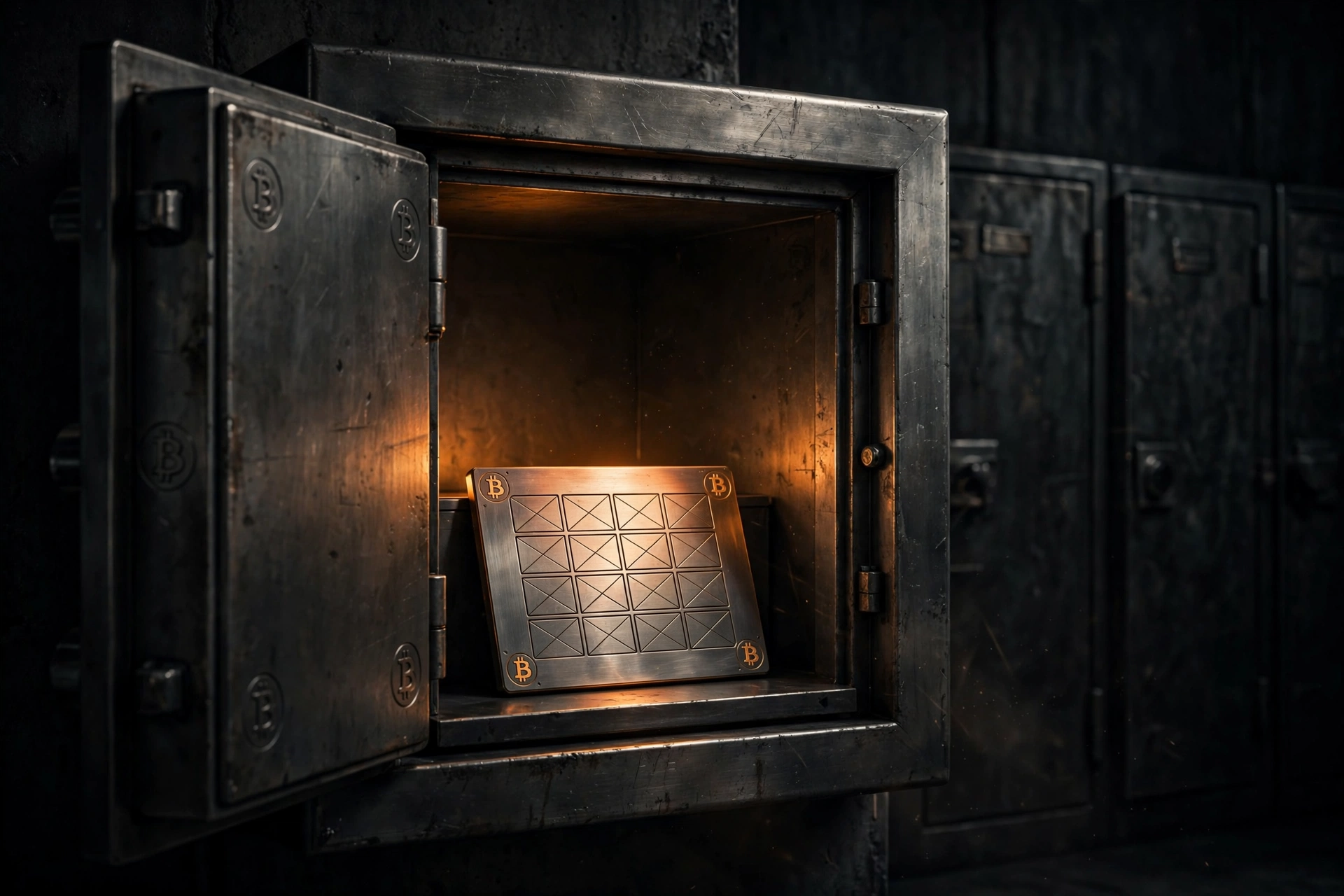
Let us give the idea its fair due. A safe deposit box solves real threats. If your home is burglarized, the thieves cannot grab what is not there. If your house burns down, the contents of a bank vault survive. Against the two events that destroy most paper backups, theft and fire at home, the box is genuinely excellent.
It also keeps your backup away from curious eyes. Roommates, guests, contractors, and visitors in your home will never stumble across a metal plate they have no business seeing if it is sitting in a vault across town. Used this way, the bank box is a reasonable location for a backup. The trouble starts when it becomes the only location, or when the plan assumes the bank will always cooperate.
A seed phrase in a bank safe deposit box is not always accessible
The keyword question “is it safe to keep a seed phrase in a bank safe deposit box” usually hides a subtler question: can I always get to it when I need it? And the answer is no, not always. That is the fundamental difference between a bank box and a backup in your own home.
Banks are open limited hours. If you need your phrase at 11pm on a Sunday or while traveling, the box might as well be on the moon. Banks close on holidays, cut hours during emergencies, and close branches permanently, sometimes giving customers only weeks to clear out their boxes. If you miss the notice, your box contents can end up in state custody as unclaimed property.
Access can also be frozen by people who are not you. Court orders, tax liens, probate proceedings, and government investigations can all lock a box you legally rent. In some countries, authorities can inspect or seize safe deposit box contents with a warrant or even without much of one. Remember what you stored there: a piece of paper or metal that anyone who reads it can use to empty your bitcoin from anywhere on earth. That is a very different risk profile than the gold coins or documents your grandfather kept in the same kind of box.
Then there is the quietest risk: bank error. Boxes get drilled open by mistake. Branches mix up box assignments during renovations. None of these are likely, but every one of them has happened to real people, and your backup plan should not depend on a single institution never making a mistake.
The bank knows your box exists, and that is a problem
Self-custody works best when your bitcoin is invisible. Nobody knows you have it, nobody knows where the keys are. A safe deposit box pokes a hole in that by design: your name is on a rental contract, and governments routinely request box records during tax audits and investigations. That is not a theft risk. It is a privacy risk, and a backup strategy should weigh both.
How to use a bank box without trusting the bank
The safe way to include a bank safe deposit box in your backup plan is to make sure the box alone is never enough to lose your bitcoin, and also never your only way to reach it.
Never make the box your only copy. Keep at least one complete backup on your own property, ideally stamped on metal and stored somewhere private. If the bank locks you out or closes the branch, you still have full access. The box copy is redundancy, not a lifeline.
Consider what you store in it. A full copy of your 12-word phrase in the box is the simplest setup and fine as a second or third copy. Some people split their phrase across locations so no single place holds the complete key, but be careful: an improperly split phrase can be worse than a full one if you lose one half. For a broader look at splitting strategies, see the guide to splitting a seed phrase across two locations.
Add a passphrase if you want real protection. An optional extra word (sometimes called the 25th word) means that even if someone reads every word in your box, they still cannot access your funds without it. Store the passphrase separately and the bank box contents become useless to anyone but you. This is the single biggest upgrade you can make to a bank box backup.
Seal it against tampering. Keep the phrase in a sealed, tamper-evident envelope or container inside the box so you can tell if anyone accessed it. Metal backups work fine here too: a stamped steel plate in a bank vault is about as disaster-proof as paper gets. For more on durable materials, browse the bitcoin self-custody guides hub.
Keep your access paperwork current. Make sure your authorized visitors list is up to date, your heirs know the box exists and how to claim it, and someone you trust knows which branch holds it. A box nobody knows about is almost as useless as a box you cannot open.
Better off-site options than a bank
If the point is simply “keep one backup outside my house,” you have options that do not involve a bank at all. A trusted family member’s home or a private safe in a second property gives you off-site redundancy without limited hours or third-party access rules.
For larger amounts, a multisig wallet beats any single-location strategy. With a 2-of-3 multisig, one key can sit in a bank box, one at home, and one with a trusted person, and no single location compromise costs you anything. The pattern is the same every time: the bank box is a fine part of a plan and a bad whole of one. Bitcoin self-custody means no single point of failure, and a rented box with someone else’s rules is a single point of failure wearing a suit.
Quick answers
Can the bank open my safe deposit box? Normally only with you present, or with a court order. Banks can also drill boxes after extended non-payment or abandonment. Your rental contract spells out the exact conditions, and they vary by country and bank.
What happens to my box if the bank closes my branch? The bank must notify you to collect your contents, usually with a deadline. Miss it and your items can end up in state custody as unclaimed property. Keep your contact details current with the bank.
Is a bank box safer than hiding my phrase at home? Against burglary and house fire, yes. Against frozen access, seizure, and privacy loss, no. The strongest setup is a metal backup at home plus a second copy off-site, which can be a bank box.
Should I tell the bank what is in the box? No. There is no reason to tell any bank employee that your box contains a bitcoin seed phrase. Describe it as documents if you must describe it at all.