



What Happens to Your Bitcoin If You Die Without Sharing the Seed Phrase
What Happens to Your Bitcoin If You Die Without Sharing the Seed Phrase
If you die without sharing the seed phrase, your bitcoin becomes unspendable forever. No court, bank, lawyer, or wallet company can recover it, because there is no password reset, no customer support line, and no central authority that can move coins without the private keys. The bitcoin stays on the blockchain, visible to everyone, locked to no one, effectively removed from circulation. The direct answer is grim: your family inherits nothing.
Every day you hold bitcoin in self-custody without an inheritance plan, you are betting your life on never dying unexpectedly. This guide explains exactly what happens to your bitcoin if you die, why self-custody makes death different from every other kind of asset, and the practical steps that keep your bitcoin from dying with you. For the full inheritance playbook, see how to store a seed phrase for inheritance planning.
What happens to your bitcoin if you die: the coins are lost, not transferred
When you die with the seed phrase in your head or in a hiding spot nobody else knows, nothing transfers. Bitcoin does not know you died. The blockchain keeps your coins at your addresses, frozen in place, and they will sit there for as long as the network exists. Lost coins are indistinguishable from coins whose owner is simply not moving them, so estimates of how much bitcoin is lost this way are guesses, not facts. The only certain thing is that the total grows every year.
This is the uncomfortable truth of self-custody: the same property that protects you from seizure, censorship, and counterparty risk also protects your bitcoin from your own heirs. Nobody can take it from you while you live, and nobody can take it from your wallet after you die. You are the single point of failure, and death removes you.
Why bitcoin is different from every other asset you own
A bank account, a brokerage account, a house, and a car all have an owner of record in some database run by a company or a government. When you die, your executor presents a death certificate, the institution verifies it, and ownership transfers. The process is slow and sometimes painful, but it works because a third party holds the keys.
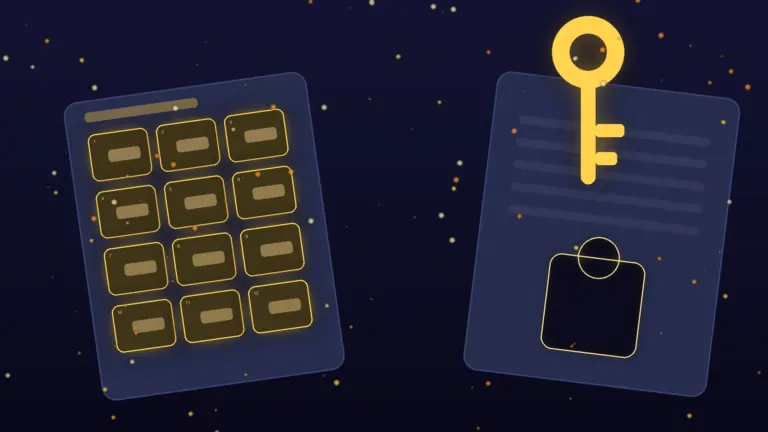
Bitcoin in self-custody has no third party. There is no institution to present a death certificate to. Your seed phrase is not a password to an account; it is the ownership itself, in the form of 12 or 24 words that generate every private key in your wallet. A 12-word BIP39 phrase has 128 bits of entropy, and without it, brute forcing access is not a realistic path for anyone, including your family. If the words are gone, the keys are gone. The asset class that gave you freedom from institutions is the asset class your heirs cannot inherit through institutions.
What your family will actually find (and what they will miss)
Picture what your heirs discover after you die. They find a hardware wallet that looks like a USB stick, maybe an app on your phone, maybe a paper with 24 words they do not recognize as anything. A hardware wallet without the PIN locks itself after a few wrong attempts. A seed phrase without a wallet to restore it into is a vocabulary list that gets thrown out during an estate cleanout.
Even when heirs find the backup, they need to know which wallet software it belongs to, whether a passphrase was used, and how to move the coins without typing the words into a phishing site. The gap between what your family finds and what they need is the inheritance problem, and closing it is your job, while you are alive.
Three ways bitcoin dies with its owner
The first way is the secret in the head. You memorized the seed phrase and never wrote it down, or you use a passphrase that exists only in your memory. When you die, that information dies with you, instantly and permanently. The second way is the hidden backup nobody finds. You stamped your words into a metal plate, hid it brilliantly, and told no one. A perfect backup, lost to a perfect secret.
The third way is the backup they find but cannot use. The paper survives, someone recognizes it as crypto-related, and then the passphrase is missing, the wallet software is unknown, or a panicked relative types the words into a phishing site and a scammer drains the wallet. A found backup that is unusable ends the same way as a lost one.
What an inheritance plan actually needs to contain
A working bitcoin inheritance plan has three parts. First, a letter to your heirs written in plain non-technical language: you own bitcoin, roughly where it is, and the words or devices described are worth real money and must be kept secret and safe. Second, access instructions a non-technical person can follow: which wallet to download, where the backup is, the passphrase if you use one, and the order of operations. Keep this in a sealed envelope with a lawyer or a trusted executor, separate from the letter if possible.
Third, a named person who knows the plan exists. Not someone who holds the seed phrase today, but someone who knows where the letter is and who to call for help. A knowledgeable Bitcoiner friend named as a technical contact is worth more than a perfect document your family is too afraid to act on. Do not store the whole plan in a password manager or cloud document that dies with your own login credentials: that is one of the most common failures.
The passphrase trap in inheritance
A passphrase is excellent theft protection while you are alive, but in death it becomes the most common single point of failure. If your heirs find the seed phrase while the passphrase existed only in your head, they hold a wallet that opens to an empty decoy and the real coins stay locked. Treat the passphrase as a separate secret with its own storage and handoff: write it into the access instructions and make sure the executor knows it is required, not optional. See what is a passphrase (25th word) and should you use one, and the broader self-custody coverage at Never Lose Bitcoin guides.
Common mistakes that leave heirs with nothing
The most common mistake is assuming “they will figure it out.” They will not. Every step your plan assumes they will figure out is a step where the inheritance can fail. The second mistake is the multisig setup nobody documented: a 2-of-3 with keys in three countries is an unsolvable puzzle after death unless the letter names every key holder, every location, and the exact signing procedure.
The third mistake is never testing the plan. Walk through the letter with your named executor once, while you are alive to answer questions. If they cannot follow the instructions now, they will not follow them when you are gone. Review the letter once a year, the same day you verify your backups are intact, following how to test your seed phrase backup without risking funds. A plan that describes last year’s setup is a plan that fails.
Réponses rapides
Can my family hire someone to recover bitcoin without the seed phrase? No. Nobody can recover coins from a completely lost seed phrase, and anyone who claims otherwise is running a scam. Grieving families are prime targets for recovery fraud.
Does the bitcoin get destroyed when the owner dies? No. The coins remain on the blockchain permanently, unspendable. Economically they leave the circulating supply, but the ledger entries exist forever.
Should I just give my heirs the seed phrase now? Handing over the full seed phrase today creates a live security risk: every holder can spend the coins, now. The safer pattern is a sealed letter plus a named executor, so access transfers at death, not before.
Is a will enough for bitcoin inheritance? A will names who should receive the bitcoin, but it cannot transfer coins by itself. Without the seed phrase and usable instructions, the will distributes an asset nobody can touch.